



In the heart of Australia’s economy lie its heavy industries: mining, manufacturing, construction, and agriculture. The machinery that powers these sectors operates under immense stress, and its reliability is paramount. Industrial lubricants are the lifeblood of this machinery, protecting vital components, reducing downtime, and ensuring operational efficiency. This guide provides a comprehensive overview of the industrial lubricants market in Australia, helping you choose the right products and supplier for your business.
What Are Industrial Lubricants?
Industrial lubricants are specialized fluids and greases designed to reduce friction, wear, and heat in machinery. Unlike automotive oils, which are formulated for the specific environment of internal combustion engines, industrial lubricants must perform in a vastly wider range of applications and conditions.
From the high-pressure hydraulics of a mining excavator to the high-temperature gears of a manufacturing plant, from the precision bearings of a food processing line to the heavy-duty components of construction equipment, industrial lubricants are engineered to meet diverse and demanding requirements.
The right industrial lubricant can significantly extend equipment life by reducing wear on critical components. It can reduce energy consumption by minimizing friction and improving mechanical efficiency. It can improve productivity by reducing downtime and maintenance requirements. Conversely, using the wrong lubricant, or failing to maintain proper lubrication, can lead to catastrophic equipment failure, costly repairs, and dangerous operating conditions.
Types of Industrial Lubricants
The industrial lubricants category encompasses a wide range of products, each designed for specific applications:
Hydraulic Oils are used to transfer power in hydraulic systems. They must maintain consistent viscosity across a range of temperatures, resist oxidation, protect against wear, and separate from water. Common applications include excavators, loaders, presses, and mobile equipment.
Gear Oils protect gears from wear and extreme pressure. They must form a strong protective film under the intense pressures found in gear teeth contact, resist oxidation at high temperatures, and protect against rust and corrosion. They’re used in gearboxes, differentials, and industrial gear drives.
Compressor Oils lubricate and cool air compressors. They must resist oxidation at the high temperatures generated during compression, prevent deposit formation (varnish), and separate from condensed water. Different types of compressors (rotary screw, reciprocating, centrifugal) have different lubrication requirements.
Cutting Fluids (also called metalworking fluids or coolants) cool and lubricate metalworking operations. They must remove heat from the cutting zone, reduce friction between the tool and workpiece, flush away metal chips, and prevent rust on machined surfaces. They come in various types, from straight oils to water-soluble emulsions.
Industrial Greases provide long-lasting lubrication for bearings, joints, and other components. They must stay in place (not leak or drip), protect against wear and corrosion, resist water washout, and perform across a range of temperatures. Different grease types are suited to different applications.
Industrial Lubricant Applications Across Australian Industries
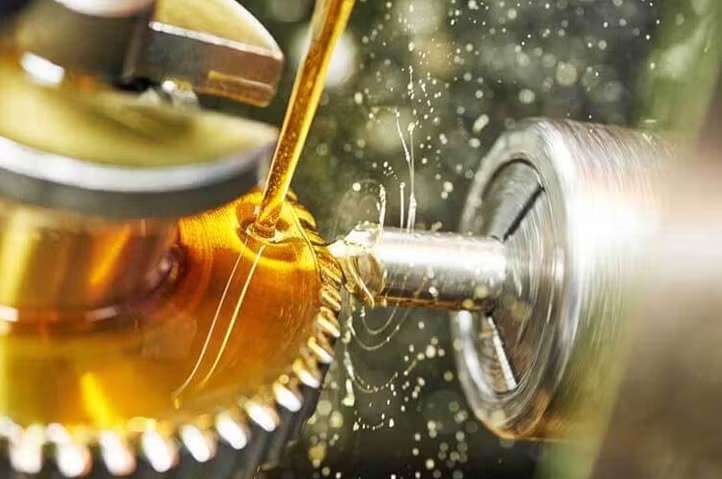
Australia’s industrial sectors have unique lubrication requirements shaped by the country’s climate, the nature of the work, and the equipment used.
Mining is one of Australia’s largest and most demanding industries. Mining equipment operates in harsh, dusty, and often remote environments. Lubricants must withstand heavy loads, extreme temperatures, and contamination from dust and dirt. Key applications include heavy-duty engine oils for haul trucks, hydraulic fluids for excavators and loaders, gear oils for drive systems, and greases for pins, bushings, and bearings. Extended drain intervals are highly valued in mining due to the high cost of downtime and the difficulty of servicing equipment in remote locations.
Manufacturing encompasses a diverse range of operations, from food processing to metal fabrication. Lubrication requirements vary widely depending on the specific processes involved. Common needs include hydraulic oils for presses and injection molding machines, gear oils for drive systems and conveyors, compressor oils for compressed air systems, cutting fluids for machining operations, and food-grade lubricants for food and beverage processing. Cleanliness, consistency, and compliance with safety standards are paramount in manufacturing.
Construction equipment is subjected to heavy shock loads, dusty conditions, and variable operating environments. Lubricants must provide robust protection under these demanding conditions. Applications include hydraulic fluids for excavators, loaders, and cranes, gear oils for final drives and transmissions, engine oils for diesel-powered equipment, and greases for pins, bushings, and pivot points. Water resistance is particularly important for equipment that may be exposed to rain or wet conditions.
Agriculture relies on a variety of machinery, from tractors and harvesters to irrigation systems. Equipment often operates in dusty, dirty conditions and may see seasonal use with long periods of storage. Multi-purpose lubricants that can serve multiple functions (such as universal tractor transmission oils that work in engines, transmissions, and hydraulic systems) are particularly valued in agriculture. Protection against rust during storage is also important.
How to Select Industrial Lubricants for Your Operation

Choosing the right industrial lubricant requires careful consideration of several factors:
Consult OEM Recommendations as your starting point. Equipment manufacturers specify lubricants based on extensive testing and engineering knowledge. Their recommendations should always be your first reference. Deviating from OEM specifications may void warranties and can lead to equipment damage.
Consider Operating Conditions carefully. What temperatures will the lubricant be exposed to? What loads and pressures must it handle? What is the operating speed of the equipment? Is the environment dusty, wet, or contaminated? All these factors influence lubricant selection.
Prioritize Quality over price. While it may be tempting to choose the cheapest option, high-quality lubricants typically provide better protection, longer service life, and reduced downtime. The total cost of ownership, including equipment life, maintenance costs, and productivity, is often lower with premium lubricants, even though the initial purchase price is higher.
Partner with a Knowledgeable Supplier who can provide technical support, product recommendations, and value-added services like oil analysis. A good supplier is a partner in your success, helping you optimize your lubrication program and solve problems when they arise.
Implement a Lubrication Management Program to ensure lubricants are stored properly, applied correctly, and changed at appropriate intervals. Regular oil analysis can help you optimize drain intervals and identify potential equipment problems before they become failures.
Quality Standards and Certifications for Industrial Lubricants

Industrial lubricants are subject to various quality standards and certifications:
ISO Viscosity Grades (ISO VG) provide a standardized system for classifying lubricant viscosity. For example, ISO VG 46 hydraulic oil has a specific viscosity at 40°C, ensuring consistency across different brands. Common ISO VG grades include 32, 46, 68, 100, 150, 220, and 320.
ISO 9001 certification of the manufacturing facility indicates a quality management system is in place, ensuring consistent product quality.
NSF Certifications are critical for food-grade lubricants. NSF H1 certification indicates a lubricant is safe for incidental food contact, while H2 is for lubricants used where there is no possibility of food contact.
OEM Approvals from equipment manufacturers indicate a lubricant has been tested and approved for use in specific equipment. These approvals are particularly important for maintaining warranty coverage.
Turvo Oil Industrial Lubricant Solutions
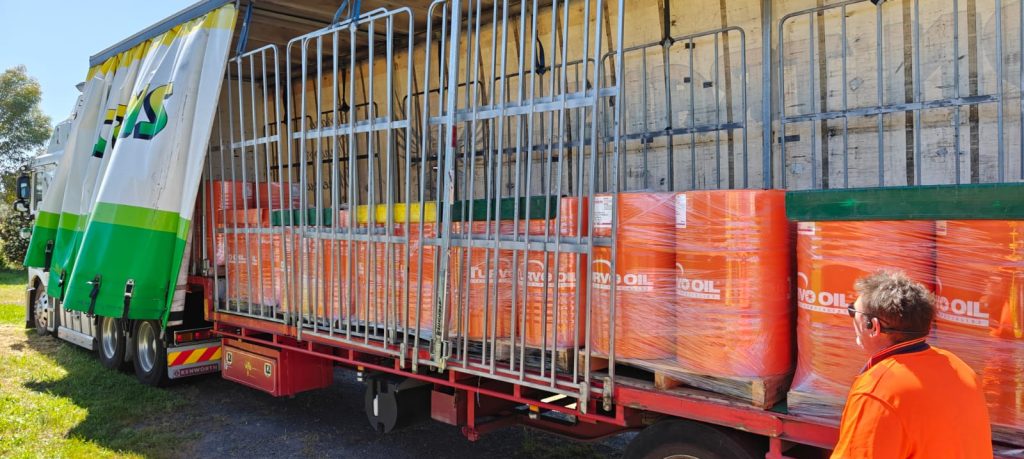
Turvo Oil Australia offers a comprehensive range of high-performance industrial lubricants designed to meet the needs of Australia’s heavy industries. From our advanced hydraulic oils and compressor lubricants to our specialized cutting fluids and industrial greases, our products are formulated for maximum protection and efficiency.
Our manufacturing facility operates under ISO 9001:2015 quality management standards, ensuring every product meets our rigorous specifications. We understand the demanding nature of Australian industrial operations and have formulated our products to perform reliably in harsh conditions.
With our local presence in Australia through our NSW headquarters, we provide responsive technical support and reliable supply. Our team can help you select the right products for your applications, develop a comprehensive lubrication program, and provide oil analysis services to help you optimize equipment performance and reduce total cost of ownership.
Conclusion
In Australia’s demanding industrial landscape, the right lubricants are not just a maintenance item—they are a key driver of productivity and profitability. By understanding the different types of industrial lubricants, their applications, and the factors that influence selection, you can make informed decisions that protect your equipment and support your business goals.
Partnering with a quality supplier like Turvo Oil ensures you have access to premium products, expert technical support, and reliable service. Whether you operate a mine site, a manufacturing plant, a construction company, or an agricultural business, we have the products and expertise to support your success.
1. What is the difference between industrial and automotive lubricants?
Industrial lubricants are formulated for the specific, often extreme, conditions of industrial machinery, while automotive lubricants are designed for the engines and transmissions of vehicles. Industrial lubricants must handle a much wider range of applications, from hydraulic systems to gears to compressors, each with unique requirements. They often need to perform in more severe conditions than automotive oils, with higher loads, more extreme temperatures, and greater contamination. The additive packages and base oils are selected specifically for these industrial applications.
2. How can I consolidate the number of lubricants I use?
Many modern industrial lubricants are multi-purpose, capable of performing well in several different applications. A knowledgeable supplier can help you identify products that can be used across multiple applications, simplifying your inventory and reducing the risk of misapplication. For example, some hydraulic oils can also be used as light gear oils, and some greases are suitable for a wide range of bearing and component lubrication. However, consolidation should never come at the expense of equipment protection, always ensure any multi-purpose product meets the requirements of all the applications where it will be used.
3. What is oil analysis, and is it worth it?
Oil analysis is the process of taking a small sample of used oil and testing it for contaminants, wear metals, and signs of degradation. It’s a highly valuable predictive maintenance tool that can help you identify potential equipment failures before they happen, saving you from costly downtime and repairs. Oil analysis can detect coolant leaks, fuel dilution, dirt contamination, and excessive wear, allowing you to take corrective action early. It can also help you optimize oil change intervals—extending them when the oil is still in good condition or shortening them if the oil is degrading faster than expected. For critical equipment or large lubricant inventories, oil analysis typically pays for itself many times over through reduced downtime and extended equipment life.
We also have guides for transformer oils, engine oils and engine coolants.